

Healthcare facilities represent one of India’s most vulnerable yet critical infrastructures. Nearly 75% of Indian doctors experience workplace violence, whereas healthcare institutions generally handle sensitive medical equipment worth crores. Therefore, robust security guard services for healthcare facilities have become indispensable. The recent incidents across major Indian hospitals underscore the urgent need for professional, trained security personnel who can navigate the unique challenges of medical environments while ensuring patient care remains uninterrupted.
Understanding Healthcare Security Challenges in India
Healthcare security in India faces distinct challenges that set it apart from other sectors. Public hospitals are more vulnerable than private facilities, as unauthorized individuals often gain easier access. The Ministry of Health and Family Welfare has acknowledged that government hospitals are more accessible to the public, creating significant security risks.
Violence Against Healthcare Workers
Recent statistics reveal alarming trends in healthcare violence across India. The Indian Medical Association reports that 75% of doctors have faced some form of violence during their careers. Emergency rooms and intensive care units witness the highest incidents of violence, with 48.8% of attacks occurring in ICUs or post-surgery areas. Patient relatives and attendants account for 68.33% of violent incidents, highlighting the need for specialized security interventions.
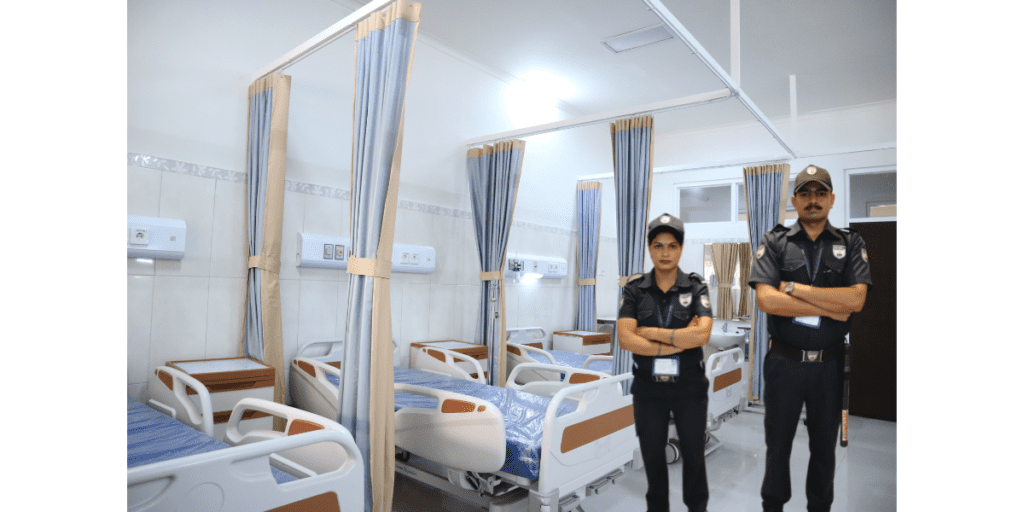
Protect your medical facility and staff with Modern Veer Rays Security Force
Asset Protection and Theft Prevention
Healthcare facilities house expensive medical equipment, pharmaceuticals, and sensitive patient information. Security challenges include theft of medical devices, prescription medications, and unauthorized access to patient records. These facilities require 24/7 protection to safeguard both tangible and intangible assets while maintaining the open-door policy essential for patient care.
Key Qualities to Look for in Manned Guarding Companies
PSARA Compliance and Licensing
Professional security guard services for healthcare facilities must hold valid PSARA (Private Security Agencies Regulation Act) licenses. The PSARA Act of 2005 mandates that all private security agencies obtain proper licensing to operate legally in India. This ensures that manned guarding companies adhere to standardized training protocols, background verification procedures, and regulatory compliance requirements.
PSARA-licensed companies provide:
- Comprehensive 100-hour training programs for security guards
- Background verification and police clearances
- Specialized healthcare security protocols
- Regular compliance updates and monitoring
Healthcare-Specific Training and Expertise
Security personnel in healthcare environments require specialized training beyond standard security protocols. Professional manned guarding companies should provide training in:
- Medical Emergency Response: First aid, CPR, and basic emergency medical procedures
- De-escalation Techniques: Managing aggressive patients and distraught family members
- Infection Control: Understanding hospital hygiene protocols and PPE requirements
- Patient Privacy: Maintaining confidentiality under healthcare regulations
- Crowd Management: Handling visitor flow during peak hours and emergencies
24/7 Operational Capability
Healthcare facilities operate round-the-clock, requiring continuous security coverage. Reliable manned guarding companies must demonstrate their ability to provide:
- Uninterrupted security coverage across all shifts
- Quick response teams for emergency situations
- Real-time communication systems with hospital staff
- Backup personnel arrangements for unforeseen circumstances
Essential Services Provided by Professional Healthcare Security
Access Control and Visitor Management
Modern security guard services for healthcare facilities implement comprehensive access control systems. Professional security personnel manage entry points, verify identification, and maintain visitor logs. Digital visitor management systems have become increasingly important, with hospitals requiring QR code-based visitor passes and real-time tracking capabilities.
Key access control features include:
- Multi-level access authorization for different hospital zones
- Visitor registration and badge issuance
- Restricted area monitoring (ICUs, operation theaters, pharmacy)
- After-hours access management for staff and emergency personnel
Emergency Response and Crisis Management
Healthcare security guards serve as first responders during various emergency situations. Their role extends beyond traditional security to include medical emergency support, fire safety, and evacuation procedures. Professional guards receive training in hospital incident command systems and coordinate with local law enforcement during critical situations.
Emergency response capabilities include:
- Medical emergency first response
- Fire evacuation coordination
- Security threat management
- Communication with emergency services
- Patient and visitor safety during crises
Surveillance and Patrol Services
Comprehensive surveillance forms the backbone of effective healthcare security. Professional security services combine manned patrols with electronic surveillance systems to provide complete coverage. Security personnel conduct regular patrols of hospital premises, monitor CCTV systems, and maintain vigilance in high-risk areas such as emergency departments and intensive care units.
Technology Integration in Healthcare Security
Digital Security Solutions
Modern manned guarding companies integrate technology with human security to enhance overall protection. Digital solutions include CCTV surveillance with advanced analytics, electronic access control systems, and mobile applications for security personnel. These technologies enable real-time monitoring, incident reporting, and seamless communication between security teams and hospital administration.
Visitor Management Systems
Professional healthcare security incorporates digital visitor management systems that streamline visitor registration, reduce waiting times, and enhance security protocols. These systems provide hospitals with real-time occupancy data, visitor tracking, and compliance documentation required for regulatory audits.
Compliance and Regulatory Considerations
Healthcare Data Protection
Security guard services for healthcare facilities must understand and comply with healthcare data protection requirements. While India doesn’t have HIPAA-equivalent legislation, healthcare providers must adhere to IT Rules 2011 and emerging data protection frameworks. Security personnel receive training on patient confidentiality, data access restrictions, and information security protocols.
Infection Control Compliance
Healthcare security guards must comply with hospital infection control policies and procedures. This includes proper use of personal protective equipment, understanding isolation protocols, and maintaining hygiene standards while performing security duties. Professional manned guarding companies ensure their personnel receive regular training on evolving healthcare safety standards.
Cost Considerations and ROI
Security guard services for healthcare facilities are an investment, not an expense. Professional security guard services help prevent theft, reduce violence-related incidents, and ensure regulatory compliance. The cost of security services must be weighed against potential losses from theft, legal liabilities from security breaches, and reputational damage from safety incidents.
Leading manned guarding companies offer scalable security solutions that can adjust to varying hospital needs. This includes seasonal staffing adjustments, special event security, and emergency response scaling during crisis situations. Flexible service models ensure healthcare facilities receive appropriate security coverage while maintaining cost efficiency.
Evaluation Criteria
When choosing security guard services for healthcare facilities, healthcare administrators should evaluate:
- Track Record: Proven experience in healthcare security across similar facility types
- Certifications: Valid PSARA licensing, ISO certifications, and industry accreditations
- Training Programs: Comprehensive healthcare-specific training protocols
- Technology Integration: Modern security technology and digital solutions
- Local Presence: Established operations in your geographic area
- References: Testimonials from existing healthcare clients
Service Level Agreements
Professional security partnerships require detailed service level agreements that outline performance metrics, response times, and quality standards. These agreements should specify training requirements, supervision protocols, and continuous improvement processes to ensure consistent service delivery.
Conclusion
Selecting the right security guard services for healthcare facilities requires careful consideration of specialized requirements unique to medical environments. Healthcare security demands more than traditional guarding services as it requires expertise in medical protocols, crisis management, and patient care sensitivity.
Professional manned guarding companies with healthcare specialization provide the comprehensive security solutions necessary to protect patients, staff, and assets while maintaining the therapeutic environment essential for healing. By partnering with experienced, PSARA-licensed security providers, healthcare facilities can ensure robust protection that enhances rather than hinders their primary mission of patient care.
Investment in professional healthcare security services represents a crucial step toward creating safer medical facilities that serve India’s growing healthcare needs. As the healthcare sector continues to expand and face new challenges, the role of specialized security services becomes increasingly vital for maintaining the trust and safety that patients and families deserve.
FAQ
Q: What specific training do security guard services for healthcare facilities need?
Healthcare security guards require specialized training, including medical emergency response, de-escalation techniques, infection control protocols, patient privacy regulations, and crowd management. Professional companies provide 100+ hour training programs covering these essential skills.
Q: How do I verify if a manned guarding company has proper PSARA licensing?
You can verify PSARA licensing through the official psara.gov.in portal or by requesting license documentation directly from the security company. Ensure the license covers your state and is currently valid.
Q: What is the typical cost range for healthcare security services in India?
Healthcare security services typically range from ₹10,000-15,000 per guard per month, varying based on location, services required, and facility size. Comprehensive packages, including technology integration, may cost more but provide better value.
Q: How does Modern Veer Rays Security Force ensure quality healthcare security services?
MSF provides PSARA-licensed, specially trained healthcare security personnel with over 40 years of industry experience. Our guards receive comprehensive training in medical protocols, emergency response, and patient care sensitivity, ensuring the highest standards of healthcare facility protection.
Q: What emergency response capabilities should healthcare security guards have?
Healthcare security guards should be trained in first aid, CPR, emergency evacuation procedures, crisis communication, and coordination with local emergency services. They should also understand hospital incident command systems and medical emergency protocols.