

India’s private security market is enormous and fragmented. Thousands of vendors, wildly varying standards, and no shortage of agencies that can put a uniform on someone and call it security. For any organisation seeking a credible partner in this environment, sorting through the options is difficult.
What separates the no 1 security company in India from the rest of the field isn’t marketing language or headcount. It’s how the organisation is led: the decisions made at the top about compliance, training, technology investment, and how people are treated. Those decisions show up at the guard post, whether the leadership intends them to or not.
Leadership and Risk Management: The Practical Connection
A lot of agencies respond to incidents. The better ones try to prevent them. That distinction comes from how leadership thinks about risk, whether it’s treated as something to manage after the fact or something to plan around in advance.
A serious security service provider invests in predictive threat analysis. That means understanding how physical security and cyber vulnerabilities intersect, not treating them as separate problems. It means doing dynamic risk assessments for clients rather than deploying a standard template across every site. And it means being willing to tell a client when their current setup has gaps, even when that’s not what they want to hear.
That kind of proactive approach requires leadership to direct resources toward it. It doesn’t happen on its own.
Compliance and Ethics Start at the Top
PSARA compliance, labour law adherence, clean vendor relationships: these things are either priorities or they’re not. You can usually tell which by looking at the agency’s track record rather than their pitch deck.
A top security agency in India with a genuine zero litigation history has earned it through consistent operational discipline. Fair wages paid on time. Transparent contracts. No shortcuts on background verification. These aren’t differentiators in how they’re marketed; they’re differentiators in what actually happens when something goes wrong.
When leadership is committed to ethical operations, it shows in how the organisation handles problems, not just how it describes itself in a proposal.
Technology Investment as an Organisational Decision
The move from manual-only guarding to tech-supported deployment isn’t automatic. Someone has to fund the R&D, build the infrastructure, and ensure guards are properly trained to use the tools.
Running a 24/7 Security Operation Centre requires capital allocation and ongoing management commitment. Data-driven surveillance that flags anomalies in real time is only useful if there are people monitoring it and a response structure in place when it triggers. These are organisational choices, and they come from the top.
A security company in India that hasn’t made those investments will tell you technology is important. One that will be able to show you the infrastructure. There’s a difference.
How a Company Treats Its Guards Reflects Its Leadership
This is the part that gets overlooked most often. Guard attrition in the private security industry runs high, industry-wide, well above 30% annually in many segments. The agencies with lower attrition tend to be the ones where guards are paid on time, treated fairly, and given a clear path forward.
That’s a leadership decision. Setting up a State Government-certified training institute costs money. Running structured pre-deployment programmes and half-yearly refreshers costs time. Paying into PF and ESI properly reduces short-term margins. The no 1 security company in India makes those calls anyway, because the alternative: a rotating, unprepared workforce, eventually shows up in service quality.
When you visit a site, and the guard is engaged, knows the post, and handles a visitor interaction professionally, that’s the result of how the organisation is run. It rarely happens by accident.
What This Looks Like in Practice: MSF
Finding the right security service provider comes to evaluating what the organisation has actually built, not what it claims. Leadership shapes the compliance culture, the training investment, the technology infrastructure, and ultimately the quality of the person standing at your facility. Those things don’t change based on a sales conversation. They’re either there or they’re not.
If you’re assessing a top security agency in India, ask to see the compliance documentation and how their command centre actually operates. The answers will tell you more than any proposal will.
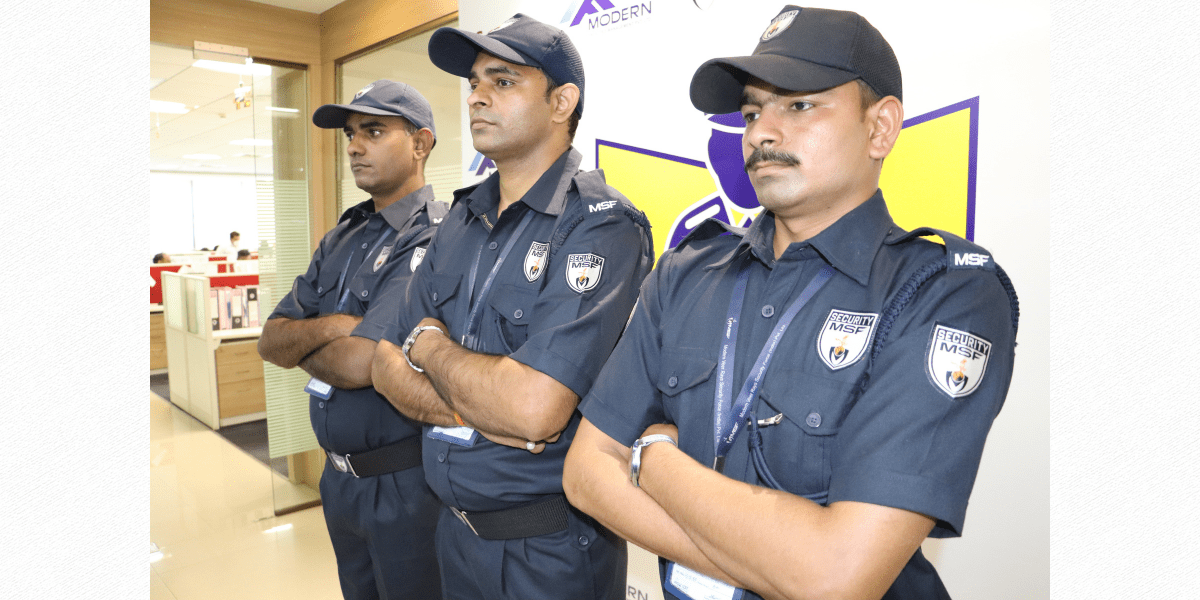
Modern Veer Rays Security Force (MSF) holds a CRISIL MSE-1 rating, maintains full PSARA compliance across all states and union territories, and has over 70,000 professionals deployed nationally. Our training is delivered through a Maharashtra State Government-certified institute, which means the curriculum is standardised rather than varying by location.
Our 24/7 SOC is backed by a Tier III data centre; infrastructure that most security companies in India don’t maintain in-house. Field supervisors operate within a structured oversight model, not just as contacts available by phone.
Whether MSF is the right fit depends on your specific requirements and scale. But as a no 1 security company in India, our operational infrastructure and compliance record warrant serious evaluation, particularly for complex or multi-state deployments.
FAQs
Q. How does a top security agency in India maintain quality control across large deployments?
Through standardised SOPs and centralised monitoring. A 24/7 National Command Centre tracks operations in real time, and regional managers conduct field audits to verify that national standards are actually being followed at each site. The key is whether those audits are documented or just informal check-ins. Ask how frequently they occur and what is reported about them.
Q. Why choose a dedicated security service provider over a general facility management or manpower vendor?
General manpower vendors often lack the regulatory depth or threat-specific training required for security work. PSARA compliance, background vetting protocols, crisis-response training: these are specialised areas. An agency whose core business is security will have invested in them differently than one offering security as one service among many. That shows up when there’s an actual incident to manage.
Q. What role does CSR play for a leading no 1 security company in India?
For an organisation employing tens of thousands of people, many from underserved backgrounds, how it approaches its workforce welfare and community engagement is part of its operations, not just a PR function.
Modern Veer Rays Security Force has active CSR initiatives covering employability, education, and healthcare. Whether that matters to your selection decision depends on your org’s priorities. But it’s a reasonable signal about how leadership thinks about its responsibilities more broadly.