

Most security failures don’t happen because of missing cameras or too few guards. They happen because nobody sat down beforehand and thought clearly about what could actually go wrong.
Passive gatekeeping, be it a guard at a desk or cameras recording footage nobody watches, is how organisations end up surprised by incidents that were predictable.
Effective security risk management services start with knowing the specific threats your facility faces, then building a response around those threats rather than around a generic deployment template.
What Physical Security Threats Look Like in Practice
Across industries, the threats that cause the most operational damage tend to be fairly consistent.
- Unauthorised access and trespassing.
- Internal theft and pilferage (which is often more costly than external theft and harder to catch).
- Workplace disputes that escalate.
- Fire hazards, particularly in industrial and storage environments.
High-traffic facilities such as hospitals, retail malls, and corporate event venues face crowd management challenges that require specialised planning.
And the risks in such environments are not solely about unauthorised entry. They are about what happens when large numbers of people move through a space under pressure.
Risk management security services address these threats before they become incidents. That’s the whole point. Responding after the fact is expensive. Preventing it is cheaper and less disruptive.
What a Proper Site Audit Looks Like
Before any guard is deployed or a camera is installed, a professional security team should physically walk the site. Not review a floor plan. Actually walk it.
During that survey, they’re mapping surveillance blind spots, checking entry and exit point vulnerabilities, and identifying patrol routes that cover the necessary ground without becoming predictable.
They’re also looking at specific risk areas: where inventory is stored, which access points have weak control, where the loading bays are and who has access to them at what hours.
The assessment produces a prioritised picture, not just a list of everything that could theoretically go wrong, but a clear view of which vulnerabilities have the highest likelihood of being exploited and which would cause the most damage if they were. That’s what drives where resources go. Security risk management services that skip this step are deploying resources merely based on guesswork.
Surveillance and Guarding: How They Work Together
Once the risk picture is clear, the deployment needs to address it.
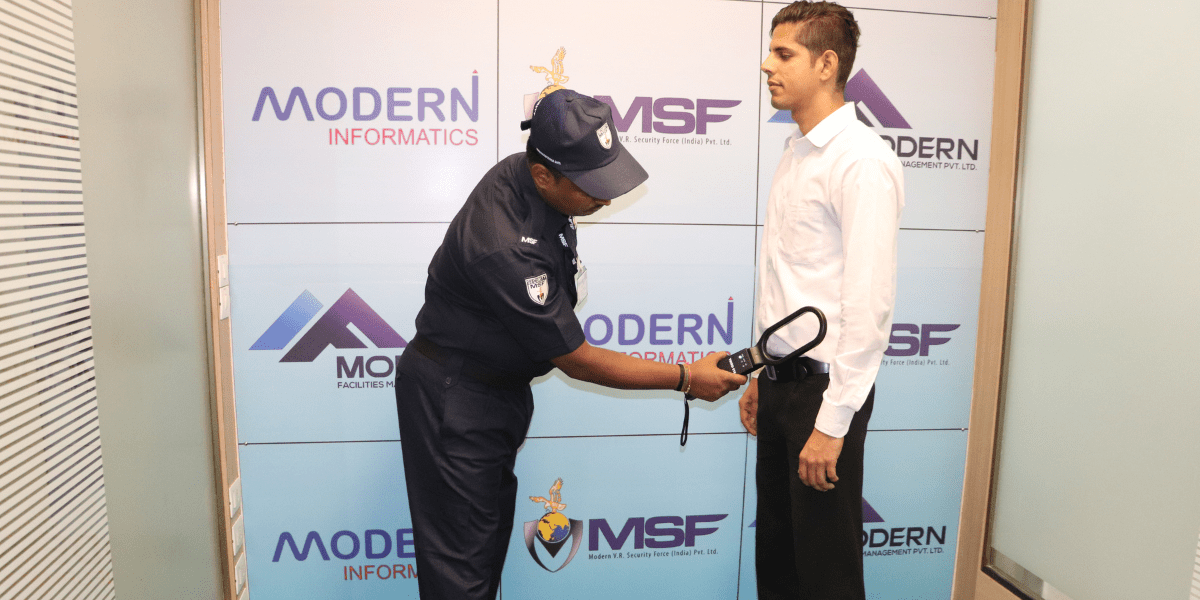
- Access control, through strict visitor logs, ID verification, and tiered entry for different areas, is the foundation.
- Manned patrols that follow unpredictable routes add active deterrence.
- And CCTV coverage closes the gaps that physical presence can’t cover continuously.
The relationship between cameras and guards matters more than most people realise. Cameras detect anomalies. Guards respond to them. One without the other leaves a gap. A camera that flags an unauthorised entry at 3 AM is useful only if someone is watching the feed and a guard can get there quickly. Surveillance and guarding services that integrate both functions, rather than treating them as separate deployments, are what actually close the gap.
Guards also provide something cameras cannot: real-time judgment. De-escalating a situation before it becomes a confrontation, recognising when something is off before a camera would flag it, and making decisions in the moment. That’s what trained personnel bring.
The Common Pitfalls Worth Knowing About
A few patterns recur in facilities with security problems despite having security measures in place.
Hiring untrained or underpaid guards is probably the most common. An underprepared guard in a demanding environment is not a neutral presence. They can make situations worse by responding incorrectly or failing to respond at all. Guard quality is where a lot of organisations try to save money, and where the cost of that decision eventually shows up.
Operating without defined Standard Operating Procedures is the other major gap. On a normal day, most guards can work without SOPs, and nothing bad happens. In a crisis (e.g., a fire, an aggressive intruder, or a medical emergency), the absence of a drilled protocol is immediately visible. Guards who haven’t rehearsed the response improvise, and improvised responses in high-stress situations are unreliable.
Regular supervision and audits are also skipped more often than they should be. Without them, standards drift. That’s just what happens over time with any deployment.
How This Applies Across Different Environments
The principles of security risk management services remain consistent, but their implementation varies by facility type.
- Residential complexes focus primarily on visitor control, access management, and night patrols that deter vehicle theft and petty crime.
- Commercial offices prioritise employee safety and reception management, along with evacuation planning.
- Industrial sites need perimeter defence, monitoring of material movement, and controls for loading and unloading operations.
A logistics warehouse dealing with repeated inventory pilferage is a good illustration of how this works. In a case like this, cameras typically capture evidence of what happened but don’t stop it from happening again. When structured guarding is added (i.e., unpredictable physical patrols combined with multi-tiered access control at loading bays), incident rates drop.
The human presence changes behaviour. The protocols remove the opportunity. To leading providers of surveillance and guarding services, both elements matter.
Security Is Not a Static Deployment
Threats change. People figure out patrol patterns. New access points get created as facilities expand. Staff turnover changes who knows about site layouts. Good risk management security services account for this.
- Patrol routes get updated to prevent predictability.
- Minor incidents are reviewed to identify protocol gaps.
- Personnel performance gets evaluated regularly rather than assumed to be consistent.
- Security audits, most notably, happen on a schedule rather than only when something goes wrong.
This kind of ongoing review is what separates a security programme that holds up over time from one that works well at deployment and gradually deteriorates.
Final Words
Technology is a useful part of any security setup. But it’s the trained people who make decisions, respond to incidents, and enforce the protocols that keep a facility safe. Security risk management services done properly move an organisation to a proactive posture, identifying vulnerabilities before they’re exploited and building the capacity to respond to incidents when they do occur.
If you haven’t done a site audit recently, that’s a place to start. The gaps it reveals are usually more specific and more fixable than most organisations expect.
FAQs
Q. What is the first step in physical security risk management?
A ground-level site survey. Before any guards are deployed, our professional team physically walks the facility, mapping vulnerabilities and assessing which risks are specific to each blind spot. A floor plan review is not the same thing. The walk-through should guide the deployment plan.
Q. How do guards and CCTV actually work together?
Cameras cover ground that guards can’t watch continuously. Guards respond to what cameras flag and handle situations that cameras can only record.
The two functions need to be connected, meaning someone is actively monitoring the feeds, and the response protocol is clear when something triggers.
Modern Veer Rays Security Force’s surveillance and guarding services treat these as an integrated system rather than separate deployments, leaving no easy-to-exploit gaps.
Q. Why do Standard Operating Procedures matter so much for security personnel?
Because in a crisis, people default to what they’ve drilled. SOPs remove the guesswork from high-pressure situations, whether a fire or a medical emergency. Guards who know precisely what to do respond faster and more consistently than those improving under stress. MSF’s SOPs also ensure responses are legally compliant, which matters when incidents are reviewed later.
Q. Can a business do its own basic security assessment?
A self-assessment is a reasonable starting point. Here’s a quick security checklist for businesses:
- Are all entry/exit points monitored and controlled?
- Is there a strict visitor logging system in place?
- Are CCTV cameras covering all high-value asset areas?
- Do employees have a clear emergency evacuation route?
- Are physical locks and perimeter fences in good condition?
This kind of walkthrough won’t replace a professional audit, but it tends to surface obvious gaps quickly. Most organisations find at least one thing they didn’t expect.