

More than its terminal, runway, and passenger lounge, an airport is where thousands of people, vehicles, aircraft, assets, and operations move simultaneously. That makes physical security a continuous responsibility, not a one-time checklist.
Airport security requirements are shaped by strict aviation-security frameworks, access-control protocols, screening procedures, personnel checks, and operational safeguards. The Bureau of Civil Aviation Security (BCAS) oversees civil aviation security, while aviation stakeholders must comply with applicable security programmes and regulatory requirements.
Yet even well-equipped airports can have security gaps. These gaps are not always caused by a lack of technology. Often, they arise from inconsistent guard deployment, weak supervision, poor coordination, outdated procedures, or inadequate response preparedness.
As an established manned security provider, we have seen how the human element can make the difference between a security plan that looks good on paper and one that works under pressure. Here are some of the most common gaps airports should watch for, along with practical ways to address them.
What Are the Key Airport Security Requirements?
Before addressing gaps, let us understand what solid airport security involves.
The exact controls vary by airport, operator, restricted area, and applicable regulations. However, airport security requirements generally cover areas such as access control, perimeter protection, personnel verification, surveillance support, vehicle movement, incident response and protection of critical assets.
Security processes must also work alongside the requirements of airport operators, airlines, ground handlers, concessionaires, cargo operators, and other entities. BCAS frameworks include security vetting, security-programme compliance and security-clearance processes involving multiple airport stakeholders.
This is why airport security cannot depend on a single layer. Technology, trained personnel, procedures, and supervision have to work together.
1. Gaps in Access Control
Access control is one of the first lines of defence at an airport. The challenge is that airports have multiple categories of personnel, contractors, vendors, service providers and visitors moving through different areas.
A common gap is not necessarily a missing access-control system. It is the failure to enforce it consistently.
Tailgating, improper badge use, unattended access points or inadequate verification can create vulnerabilities, particularly in high-traffic environments.
How to Address It
Airport operators should combine electronic access systems with properly trained airport security guards. Guards can verify credentials, observe behaviour, manage exceptions and intervene when someone attempts to bypass established procedures.
Regular post audits and supervisor checks are equally important. Treat access control as an active security function, not just a technology deployment.
2. Insufficient Perimeter Vigilance
Airports cover large areas, and their perimeters can include roads, service entrances, boundary fencing, parking areas, cargo zones and other less visible locations.
A camera may identify an incident, but a trained guard on the ground can often spot suspicious behaviour before it develops into one.
One frequently overlooked airport security requirement is therefore continuous ground-level vigilance across vulnerable areas.
How to Address It
A layered approach works best. Static guards can secure access points while mobile patrol teams cover wider areas. CCTV monitoring, scheduled patrols and random checks can be combined to reduce predictable security patterns.
Quick response teams can then support frontline personnel when an unusual situation escalates.
3. Weak Personnel Verification and Security Awareness
Airports bring together a huge workforce. Employees may work directly for the airport or for airlines, concessionaires, maintenance companies, cargo operators, and contractors. That makes personnel management a critical part of physical security.
A common gap occurs when background verification, identity checks, access permissions and security awareness are treated as separate administrative tasks instead of elements of one security system.
How to Address It
A stronger model connects personnel deployment with verification and access protocols. Guards should also be trained to identify unusual behaviour, unauthorised movement and violations of established procedures.
Refresher training matters because airport environments change constantly. New employees, contractors, routes and operational areas can introduce new risks.
4. Inadequate Incident Response
Security incidents rarely arrive at convenient times. An airport may face an unattended item, restricted-area intrusion, aggressive behaviour, suspicious movement or an access-control breach during a peak operational period. A security plan alone is not enough. Personnel must know exactly what to do when something happens.
This is one reason why aviation security services in India increasingly require a combination of trained manpower, command structures, and clear escalation procedures rather than relying solely on surveillance technology.
How to Address It
Every security post should have clearly defined responsibilities and escalation protocols. Guards should know whom to contact, how to secure the immediate area, and how to support the relevant airport authorities. Regular mock drills and scenario-based training can reveal weaknesses before a real incident exposes them.
5. Poor Supervision of Security Personnel
Even highly trained guards can become less effective with weak supervision.
Missed patrols, incomplete reporting, unattended posts, and inconsistent adherence to SOPs often signal a larger management problem.
This matters especially at airports because security operations run around the clock. A strong morning shift cannot compensate for poor supervision at night.
How to Address It
Airport security should have multiple layers of supervision. Shift supervisors, field officers, and senior security managers should conduct regular inspections and review attendance, patrols, incidents, and post performance.
Digital attendance and reporting systems can improve accountability, but technology works best when supported by active human supervision.
6. Lack of Coordination Across Security Functions
Airport security is rarely handled by one team alone. Airport operators, airlines, law enforcement, ground handlers, cargo operators, and other stakeholders may each have defined roles.
That creates another potential gap: fragmented communication. A guard may notice something important, but if the information does not reach the right team quickly, the value of that observation is reduced.
How to Address It
Strong airport security requirements should be translated into practical communication protocols. Teams need clear reporting hierarchies, points of contact, and escalation mechanisms. Regular coordination exercises can also help different teams understand their respective responsibilities during emergencies.
7. Over-Reliance on Technology
Modern airports use extensive surveillance and security technology. CCTV, access control, screening systems and other technologies can significantly improve visibility. But technology does not replace trained physical security personnel.
A camera can detect movement. It cannot independently question an unauthorised person, manage a crowd, secure a gate, or make a judgement in a rapidly changing situation.
This is where professional aircraft security services and manned security operations complement technology by providing real-time human presence around aircraft, restricted areas, and operational zones.
How to Address It
The objective should not be technology versus manpower. It should be technology plus manpower.
A trained security officer can respond to information generated by surveillance systems while maintaining situational awareness on the ground.
8. Gaps Around Aircraft and Critical Operational Areas
Aircraft are high-value assets, and the areas immediately surrounding them require disciplined access control and constant vigilance.
Security concerns may involve unauthorised personnel, vehicle movement, service activity, or attempts to enter restricted operational areas.
Effective aircraft security services should therefore form part of a broader security strategy covering both the aircraft and the surrounding operational environment.
How to Address It
Deploy dedicated personnel according to operational needs, with clearly defined access zones and responsibilities. Security teams should also coordinate closely with airport and airline personnel to ensure authorised operational activity is not mistaken for unauthorised access.
9. Poor Documentation and Incident Reporting
A security incident does not end when the immediate threat disappears.
What happened? Who responded? When was it detected? What action was taken? Was there a delay in escalation?
Without accurate records, these questions become difficult to answer. Documentation is therefore an important but sometimes overlooked part of airport security requirements.
How to Address It
Security teams should maintain structured incident logs, shift reports, patrol records, attendance data, and escalation records. Regular reviews can identify recurring issues and help management improve deployment patterns and procedures.
Good reporting also creates accountability, since it turns individual incidents into useful operational intelligence.
Building a Stronger Airport Security Model
As mentioned earlier, the most effective airport security strategy is layered. It begins with understanding the airport’s specific risk profile and regulatory obligations. From there, physical security measures should combine trained personnel, access control, patrols, surveillance support, supervision, incident response, and continuous review.
For organisations evaluating aviation security services in India, the quality of the security partner matters as much as the number of guards deployed. A credible provider should have the operational experience, recruitment standards, training systems, supervision structure, and response capabilities required for high-security environments.
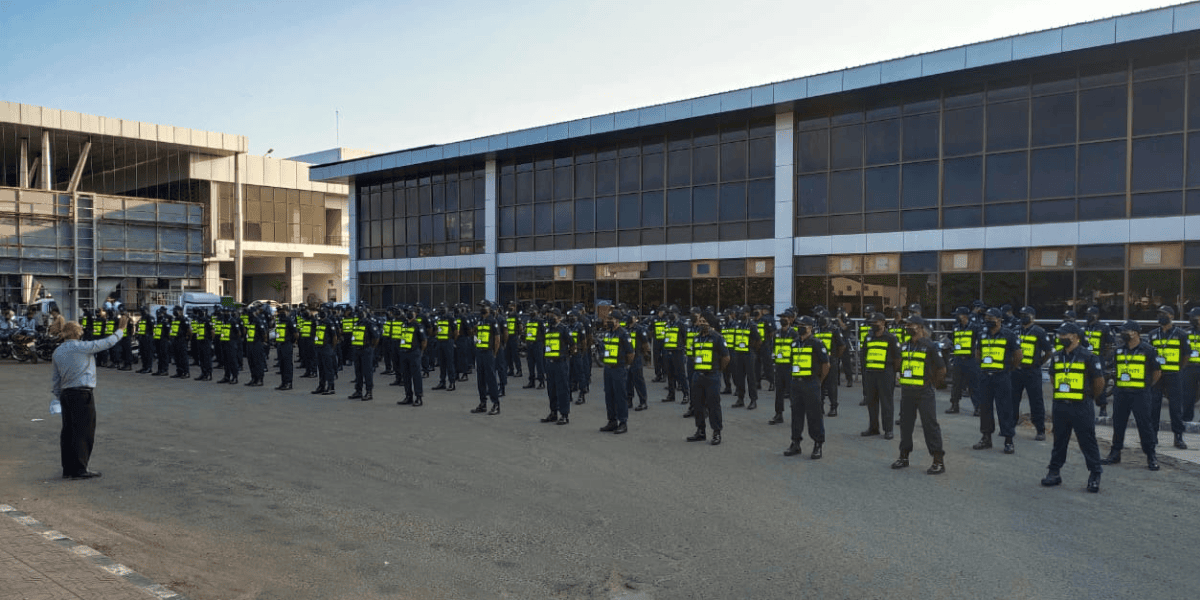
At Modern Veer Rays Security Force (MSF), we believe effective security starts with people trained to observe, prepared to respond, and managed to a consistent standard. Our approach combines professional manned guarding with structured supervision, technology-enabled monitoring, and operational discipline.
That approach has helped MSF become one of India’s leading manned guarding security providers. Today, we secure 35% of India’s major airports, alongside some of India’s largest energy and utility networks, financial institutions, supply chain and logistics, and more.
With decades of experience and a Pan-India operational footprint, MSF understands that physical security is not just about placing guards at a gate, but about building a security operation that remains alert, accountable, and responsive at every level. And that is precisely where we bring our strength.
FAQs
Q. What are the key airport security requirements in India?
Key airport security requirements generally include access control, perimeter protection, personnel verification, surveillance support, restricted-area security, incident response, and effective security procedures. Exact requirements vary by airport, area of operation, and applicable aviation-security regulations.
Q. Why are airport security guards important?
Airport security guards provide a critical layer of physical security. They monitor access points, patrol designated areas, verify credentials, identify unusual activity, and respond to security situations. Their presence also complements CCTV, access-control systems, and other security technologies.
Q. What do aviation security services in India include?
Aviation security services in India can include manned guarding, access-control management, perimeter security, terminal security, patrols, incident response, security supervision, and protection of critical airport assets. That scope depends on the airport’s specific operational and security requirements.
Q. What should airports look for in an aircraft security services provider?
Airports should evaluate a provider’s experience in high-security environments, recruitment and verification practices, guard training, supervisory capabilities, emergency-response preparedness, geographical reach, and ability to manage large-scale deployments. Proven experience in aviation and other critical infrastructure sectors is particularly valuable.
Q. How does Modern Veer Rays Security Force support airport security?
MSF provides large-scale manned guarding and physical security solutions for critical infrastructure and high-risk environments. We currently secure 35% of India’s major airports, along with major banks, energy and utility networks, ports, supply chains, logistics operations, and leading BSE companies.