

It’s no secret that ports carry about 90% of global trade. That also means when something goes wrong at a port, it ripples. Delays show up in factories, stores, and prices that people complain about weeks later.
Ports are massive, always-on places. Trucks rolling in at odd hours. Contained stacked like puzzles. Too many moving parts to count. That’s precisely why they attract cargo theft and smuggling, among other problems nobody wants to talk about until it’s already serious.
Real port security services aren’t about locking a gate and calling it a day. They’re layered. People on the ground. Clear processes. Tech that actually gets used. Port security guards watching patterns, not just perimeters. On-ground guarding ports in a way that understands how the place works, not how it looks on a diagram.
Physical port security, when it’s done right, stops trouble before it becomes a headline. Most of the work happens behind the scenes, while the rest of the world keeps assuming containers magically move from ship to shelf. This piece looks at what’s really going on back there, and why it matters more than most people realise.
Why Maritime Security is Non-Negotiable
Maritime security isn’t optional because too much depends on it. It sits at the centre of ecosystem health, global trade continuity, order at sea, and basic human safety. When one of those breaks, the impact spreads fast and rarely stays contained.
A single serious breach at a port can stall shipments and push insurance costs through the roof, not to mention it puts lives at risk. That’s why international frameworks like the ISPS Code exist. They set the baseline for what ports must do, not the complete picture of what they should do.
Modern threats are rarely simple. Physical theft blends with cyber intrusion. Insider collusion overlaps with operational lapses. Accidents happen where controls get lazy. Because of that mix, physical port security must remain alert and adaptable.
The goal stays constant, even as risks change. Protect the cargo. Protect the people. Protect the environment that surrounds the port. Everything else depends on getting that right.
The Role of Port Security Guards
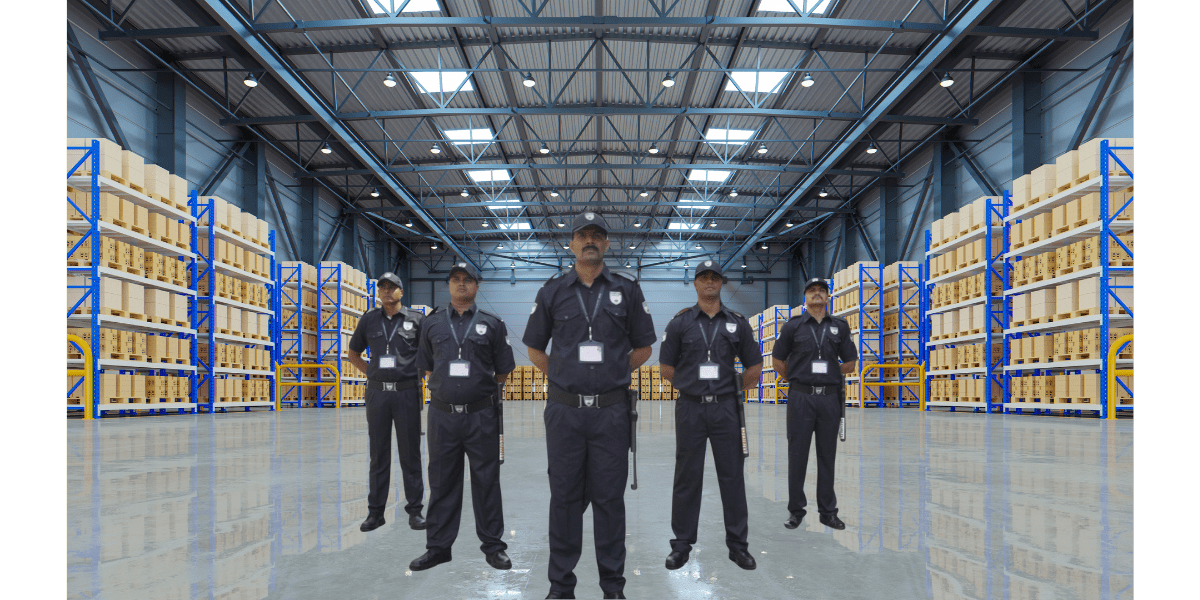
Technology can flag an alert. A human still has to decide what it means. That partnership is where real security lives. On-ground guarding ports isn’t generic guard work. It takes specialised training and the kind of discipline you only build over time.
Port guards deal with controlled chaos every day: thousands of workers and visitors moving in and out; containers that all look the same until one doesn’t; long shifts that suddenly get tense when MARSEC levels change. They inspect cargo to deter smuggling and theft, as well as to maintain order when operations are under pressure.
When something goes wrong, they’re also the ones coordinating with customs and the coast guard. That requires trust and an understanding of the chain of custody that sensors simply don’t have.
These guards are trained for the realities of ports, be it hazardous materials or high-volume movement in restricted zones. Their presence closes the gaps technology can’t see, and that human layer is still very much irreplaceable.
Risk Prevention: Proactive Intelligence and Surveillance
The strongest port security services don’t wait for trouble to announce itself. Because they spot it early, sometimes before it even reaches the gate. That starts with honest threat assessments, and a lot of this work runs on shared intelligence. Ports talk to law enforcement. Customs compares notes. Private providers flag patterns they’ve seen elsewhere. No single player considers the whole picture, but together the outlines start to form.
That’s where data-driven patrols and targeted inspections come in – not random movement for show, but focused attention where risk is building. It creates a window to act while a problem is still small. And this part is pretty simple. Prevention is always cleaner and safer than trying to recover after the damage is done.
Technology Integration in Physical Port Security
As mentioned earlier, modern ports run on layers of tech stacked on top of each other for a reason. No single system sees everything. ML-driven video analytics scan crowded terminals for behaviour that doesn’t quite fit. Drones give eyes over massive yards that are impossible to cover from the ground alone.
Biometric access controls and smart ID cards make identity fraud harder to pull off. Intelligent fencing and sensors trigger alerts the moment a perimeter is touched. Even below the surface, underwater sensors and sonar watch approaches most people never think about.
None of this replaces people. It stretches them. Port security works best when technology expands the reach of security guards, making coverage sharper and far more precise than human effort alone could manage.
MSF: India’s Leader in Integrated Port Security Services
As we’ve discussed so far, elite port security guards matter. So does intelligent surveillance. So does the unglamorous work of thinking things through before something breaks.
Modern Veer Rays Security Force approaches ports the way ports function, not the way they look on paper. Big. Fast. Unforgiving of mistakes. Our strength is in blending logistics know-how and sheer operational scale into something that holds up under pressure. We create secure corridors where cargo and people can move without friction.
Every terminal gets its own risk assessment. Protocols shift based on layout, traffic patterns, plus threat profile. On the ground, 24/7 rapid-response teams are trained specifically for maritime environments, where timelines are tight and coordination matters. Over it all sits an integrated tech stack that supports real-time monitoring and keeps compliance from drifting.
What sets MSF apart is our understanding of port rhythms. Our logistics experience helps keep operations moving while security stays tight. That mix of scale and deep domain knowledge is exactly what effective port security services need today, even if most people only notice when it’s missing.
So, for ports moving critical cargo, strong port security is foundational. And if you need a partner that understands how maritime logistics and real-world risk intersect, Modern Veer Rays Security Force positions itself where it belongs: standing watch over the nation’s gateways, quietly and deliberately.
FAQs
1. How often should ports review and update their port security services strategy?
At minimum, once a year. But honestly, anytime the port changes shape. New terminals, new traffic patterns, new threat alerts, or regulatory shifts are all good reasons to recheck whether port security services still match reality.
2. How do MSF’s port security guards differ from general industrial security staff?
Our security guards work in a very different world. They’re trained for maritime rules, cargo movement, ISPS compliance, and international logistics. General industrial guards usually aren’t exposed to that level of complexity or regulatory pressure.
3. What role does cybersecurity play in port security today?
A bigger one that most people admit. Physical port security now depends on digital systems. If access controls, cargo data, or surveillance networks are compromised, it can directly enable smuggling or other severe operational disruption.
4. Can on-ground guarding ports reduce insurance and compliance risks?
Yes, and often quietly. Strong on-ground guarding practices improve audit results and usually help with ISPS inspections. Over time, that can translate into smoother compliance reviews and even lower insurance premiums.
5. How scalable are MSF’s modern port security services for expanding ports?
Good port security services are built to stretch. Modern Veer Rays Security Force’s flexible manpower and data-driven patrol planning allow security to grow alongside traffic volumes and new terminals without starting from scratch each time.