

Top Event Security Providers: Standards, Training, Expertise Explained
The events sector has scaled up considerably. Tech summits drawing international delegates, music festivals spanning multiple days, and exhibition halls with tens of thousands of visitors. The logistics of managing these gatherings have gotten more complex, and so have the security requirements.
The problem most event organisers run into is that the security market looks deceptively uniform. Every agency will tell you they handle large events. Figuring out which ones actually have the operational depth to back that up takes more than reading a proposal. Here’s what actually matters when evaluating top event security providers.
Standards and Compliance: The Baseline That Matters More Than It Sounds
PSARA licensing is the legal starting point. Every guard deployed at your event should be licensed, background-checked, and documented. This isn’t a formality. It’s what determines where liability lands if something goes wrong. Organisers who hire unlicensed agencies because they are cheaper tend to find out why that was a mistake at the worst possible moment.
Beyond the federal framework, municipal regulations apply to large gatherings and vary by city. A credible agency knows those requirements for your specific venue and handles compliance as part of the engagement. If you’re asking a prospective provider whether they know the local rules and they have to pause to think about it, that tells you something.
Training: The Gap Between a Guard and a Professional
Most people who’ve worked events have seen the difference. A trained professional handles a tense moment at the gate without making it worse. Someone hired at the last minute from a staffing list often makes it worse. That gap comes down entirely to training.
The best event security company invests in pre-deployment preparation that goes well beyond physical readiness. Conflict de-escalation is a real skill. Learning to read a situation before it escalates, and how to intervene verbally before it requires anything physical.
Soft skills matter too. At a corporate event or a ticketed public gathering, the security team is often the first point of contact for attendees. How they handle that interaction shapes the experience.
First aid and CPR certification are non-negotiable. Medical emergencies at large events happen. A guard who can stabilise a situation while waiting for paramedics is genuinely valuable. One who doesn’t know what to do is a problem when seconds matter.
Risk Assessment and Crowd Management: This is the Real Expertise
Crowd dynamics are difficult to manage at scale. What starts as a dense but orderly gathering can change quickly under the right conditions, whether due to bottlenecks near exits, pressure building at the stage, or a rush triggered by something unexpected. Managing that requires planning, not improvisation.
Top event security providers conduct a Threat, Vulnerability, and Risk Assessment (TVRA) before the event. It means physically surveying the venue, identifying CCTV blind spots, mapping emergency exit routes, and stress-testing evacuation protocols before anyone arrives.
It also means establishing clear communication lines with local police, fire departments, and traffic authorities in advance. So if something does happen, there’s a unified response rather than three agencies trying to coordinate on the fly.
Zoning is a practical tool that gets underused. Dividing a venue into sections with monitored capacity limits and directional flow paths prevents the crowd concentration that leads to surges. Professional security for events builds this into the deployment plan from the start, not as an afterthought when the venue is already filling up.
Technology: Useful When It’s Actually Integrated
Digital access control has changed how entry management works at large events. RFID wristbands, barcode scanning, tiered credential checks for VIP and backstage zones – these tools are faster and harder to circumvent than physical ticket checks. For outdoor festivals or large exhibitions, portable CCTV command centres and drone surveillance provide the security team with a real-time view of crowd density across the entire site.
The caveat is that technology needs people behind it. A drone identifying a disturbance in sector three is useful only if someone is watching the feed, and a response team can get there quickly. Professional security for events means the technology and the ground deployment are connected, not running in parallel without coordination.
Any agency claiming to use these tools should be able to explain specifically how they integrate into the response structure. Vague answers about surveillance and real-time monitoring are easy to give. A concrete answer about who watches what and what happens when something triggers is more revealing.
MSF: A Credible Option Among Top Event Security Providers
Events are remembered for what happened inside them. When security works properly, nobody notices it. When it doesn’t, it’s the only thing people talk about afterwards.
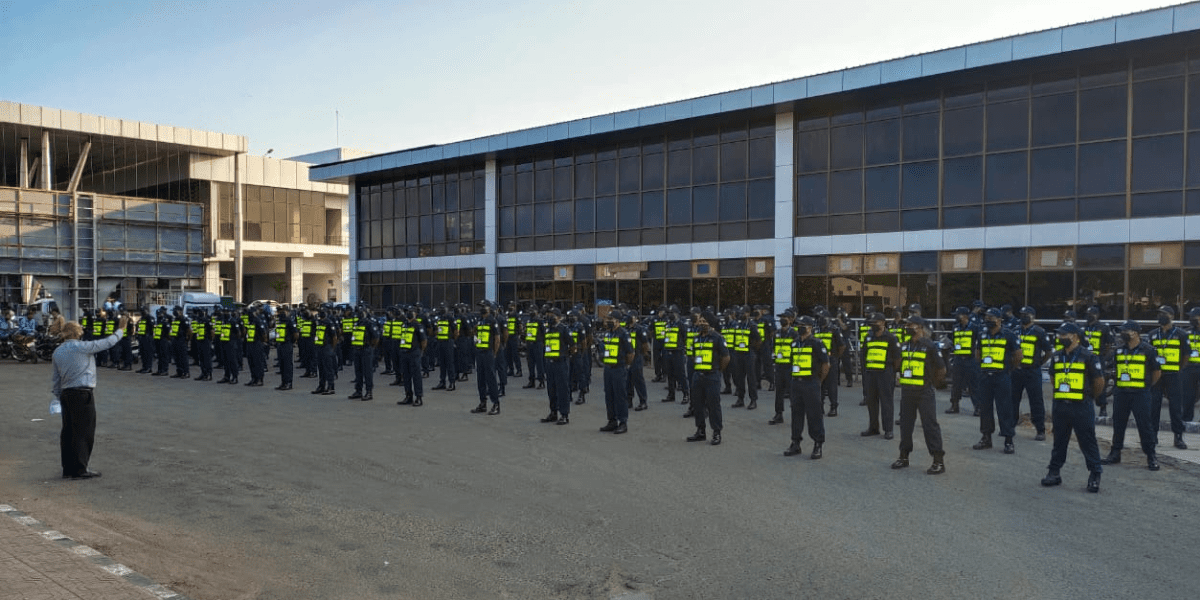
Modern Veer Rays Security Force (MSF) has built a legitimate presence in the event security space. With over 70,000 professionals deployed nationally, we have the operational scale to handle both large public gatherings and smaller high-stakes corporate functions. Our pre-event process starts with a thorough risk assessment, and our teams coordinate with venue staff and local authorities as part of the deployment.
For VIP and celebrity protection, MSF provides dedicated executive protection officers alongside general crowd management: planned arrival and departure routes, green room security, and protective positioning. That’s a separate brief from perimeter management and requires specific training.
If you’re evaluating the best event security company for a large-scale event, contact Modern Veer Rays Security Force for a pre-event security assessment before your venue date is locked. The earlier you bring us in, the more useful the planning process will be.
FAQs
Q. What is the standard ratio of security guards to event attendees?
The general industry benchmark is 1 guard per 50 to 100 attendees, but that number varies significantly by event type. Events involving alcohol, high-density standing areas, or VIP movement through public zones require a denser presence. The pre-event assessment should produce a specific recommendation for your venue rather than applying a generic ratio.
Q. How do top event security providers handle VIPs and high-profile guests?
Through dedicated executive protection units, which are a separate deployment from general crowd management. Close-protection officers plan arrival and departure routes in advance, usually away from public flow. Green room access is monitored throughout the event. The protection cordon adjusts based on the level of public exposure the VIP has during the event. It’s not a fixed setup.
Q. Can a security agency help manage traffic outside the venue?
Yes, and it’s worth taking seriously. Congestion in parking areas and approach roads puts pressure on entry gates, which can compound the crowd-management problem before the event even starts. Professional security for events coordinates with local traffic police to manage vehicle flow, keep emergency lanes clear, and organise VIP parking separately from general access. Getting this sorted in the pre-event planning phase avoids most of the problems.
Q. What happens if severe weather hits an outdoor event?
It should be covered in the risk assessment, not worked out on the day. A credible agency establishes weather-related emergency protocols during pre-event planning: designated shelter areas, evacuation routes, and clear guard assignments to guide attendees safely. The best event security company briefs its teams on those protocols before deployment so the response is coordinated rather than reactive when conditions change quickly.